


Drum Handling Safety and Solutions
Correct procedures for handling 55-gallon (210 liter) steel, fiber and plastic drums.
Safety Conscious drum handling solutions
Solve Drum Handling Problems
Also See: How to Select the Right Drum Handler
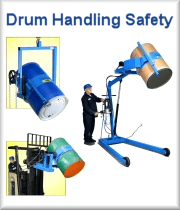
Risks of handling a heavy 55-gallon (210 liter) drum
- It can be hazardous to move a drum with your forklift
- Have you seen people manually roll a drum on the bottom rim?
- Ever see someone roll a drum down a makeshift ramp?
- There's a better way to mix the contents of a drum than rolling it on the floor!
Identify the Hazards:
Video: MUCH More than Drum Handling
Drum Handling Problems
Drum Handling Solutions

Back Strain
Repetitive Motion Injuries
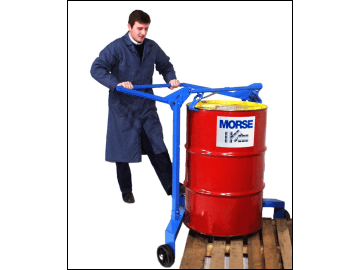

- Flexible plastic drums are dificult to grip
- Slippery, cluttered or uneven floors
- Dangerous drum contents
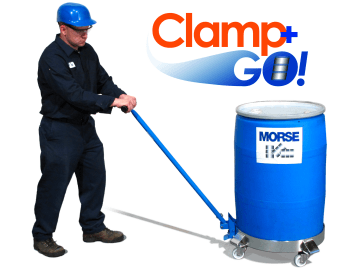
Drum Dolly and Clamp+GOTM Dolly Handle
to Safely pull or push a heavy drum on a wheeled dolly
2, 3 and 4 Wheel Drum Trucks
Improve Ergonomics to help avoid injury and keep employees safe Drum Palletizers
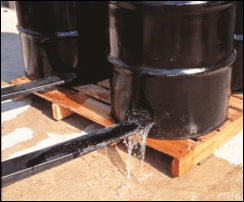
Video: WRONG Way vs. RIGHT Way
to move a drum
Model 288-1 product details
are a great time saver for high volume drum applications, like loading and unloading trucks. There is a better and safer way
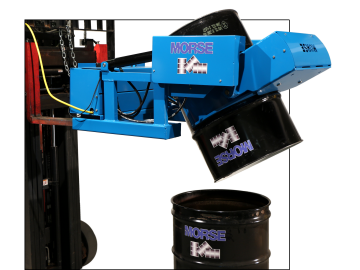
GRIP+GOTM Power Grip Forklift Drum Handler
Rack Drums in Horizontal Position
- Moving drums with bare forks is NOT recommended.
- Use a drum racker designed for the job
- Drums are stored on their sides should be cradled in a drum rack
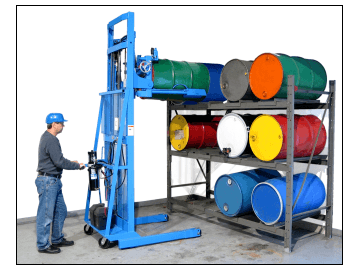

Image by Ben Thompson
Never Overload Your Drum Handler!
Each Morse drum handler is designed to specific standards with engineered safety factors... but if someone exceeds the rated capacity, all bets are off! Under no circumstances should any modifications be made to Morse machinery without factory authorization. Each Morse model is designed to perform a specific job, and alterations may result in injury to operator or machine. Also, any modifications would void the warranty.
Engineered drum handling equipment is designed to handle specific types and sizes of drums, as listed in the Operator's Manual for each model.
DO NOT attempt to handle any other type of drum or object.
DO NOT attempt to operate a damaged or malfunctioning drum handler, or one with missing parts.
Contents shifting inside drum can make it difficult to control.
Recommendations for drum handling safety... Drum handling Safety Tips
Heavy drums should always be moved with proper drum handling equipment. Use a drum truck, forklift attachment, below-hook drum lifter or other equipment specifically designed for drum handling.
A full 55-gallon (210 liter) steel drum can weigh over 2000 pounds (907kg), with typical weights of 400 to 800 Lb. (180 to 363 kg). When being moved, the contents of your drum may shift inside, making the drum difficult to control or even dangerous. There are also special considerations when handling a plastic drum or a fiber drum. Conditions such as restricted spaces and slippery or uneven floors can entail greater risks.
Mishandling a heavy drum can cause serious injury, damage the drum, waste valuable contents or contaminate the environment. Common injuries include a strained back, crushed fingers or hands, and foot trauma. Incidents of dropped drums, or drums rolling out of control, can also cause spills and damage.
Always Use Protective Clothing
Eliminate Risk Factors
Always use proper equipment designed for the task when handling heavy drums. Train all employees in proper drum handling safety procedures and use of drum handling equipment.
.png)
People Kept Speeding by the Safety Barrels... Until They Saw the "Barrel Monster"
Far beyond regular traffic barrels, the looming "Barrel Monster" got people's attention...
Hopefully, the "Barrel Monster" got people to slow down through the construction zone. A student was "arrested for stealing and damaging the traffic barrels." But, "the construction company requested that the charges be dropped and even suggested that another barrel monster in the construction zone could help deter traffic there."
We often ignore signs of danger because we're used to it, or that's "just how we do things."
Don't ignore the dangers of handling heavy barrels. Ensure your employees' ergonomic and safety needs are met.
Improper barrel handling practices lead to many workers being injured every year. Having all staff follow proper barrel handling procedures could prevent many of these injuries, while using safety conscious drum handling equipment will also help minimize the risks.
The variety of drum types and sizes used today presents additional challenges. The equipment to handle steel drums, may not be safe for handling a plastic barrel, or a fiber drum.
And how are you going to handle that 2500 Lb. (1134 kg) drum?
Read what happened to the creator of the "Barrel Monster"
Drum Handling Solutions
Equipment Designed for
Safe Drum Handling
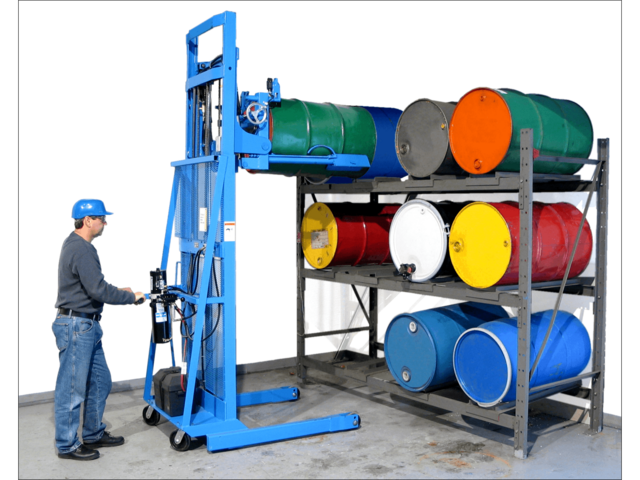
Drum Rackers
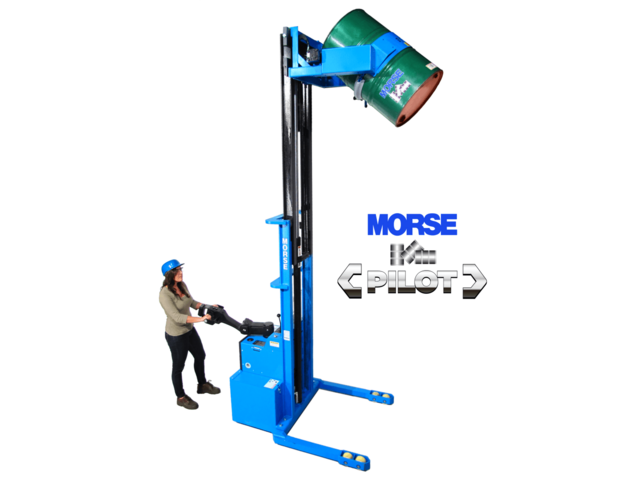
Mobile Drum Handlers
Move Empty Drums
- Support the leaning drum with your thigh, and face it the way you will travel. Then roll the drum on its lower rim by rotating the upper rim hand over hand.
- To lift an empty drum, squat, then straighten your legs. Do NOT bend your back. Correct posture and placement of hands and feet is essential when handling drums.
- When rolling an empty drum on its side control it all the way, using your gloved hands. Never roll a drum out of a truck or past a blind corner without posting a guard.
- Be alert for burred edges, lock rings and bungs that may catch your gloves or clothing and throw you off balance.
Move Heavy Drums
- A partially filled drum may not seem heavy, but shifting contents can make it difficult to handle. It may roll unpredictably and be difficult to control. Handle it carefully to avoid damage and accidents.
- Drum handlers are available to safely move heavy steel, fiber and plastic drums.
- Specially designed drum trucks are a much safer alternative for moving drums
- A safer way to move drum dollies is the Clamp+GOTM Dolly Handle.
- Forklift drum movers are a great time saver for high volume drum applications, like loading and unloading trucks.
Palletize Drums
- Several mobile drum palletizers are available
- Some customers use a below-hook drum lifter with your hoist
- Rapidly load / unload palletized drums with a MORSPEEDTM Forklift Attachment
- Ergonomic drum handlers to lift, move and pour a drum
- Mobile drum handlers
- Forklift drum handlers
- Below-hook drum carriers
Dump Drums
Mix Drum Contents
Mixing the contents of a closed drum avoids the hazards of worker exposure, possible contamination and messy cleanup. This can be accomplished with a drum roller or drum tumbler. Choose a drum roller for gentle blending. Whereas a drum tumbler provides a more vigorous mix inside the drum.Get Help with Drum Handling Problems
If you need to solve a drum handling problem, please email us or call (315) 544-8762 to speak with a Morse professional about the best drum handling safety for your application.Equipment Designed for
Safe Drum Mixing
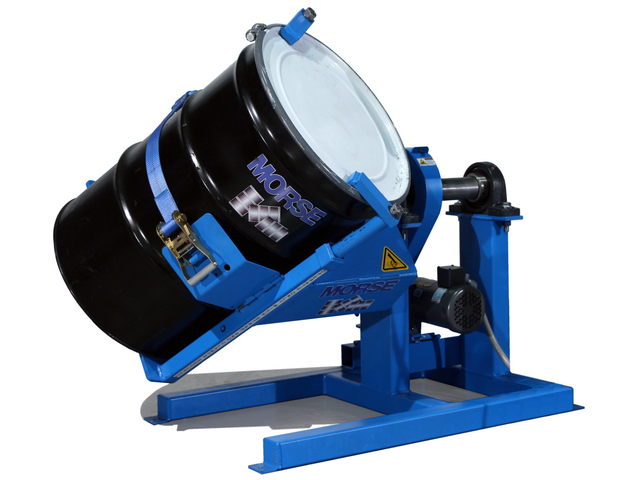
Drum Tumblers
to vigorously mix drum contents
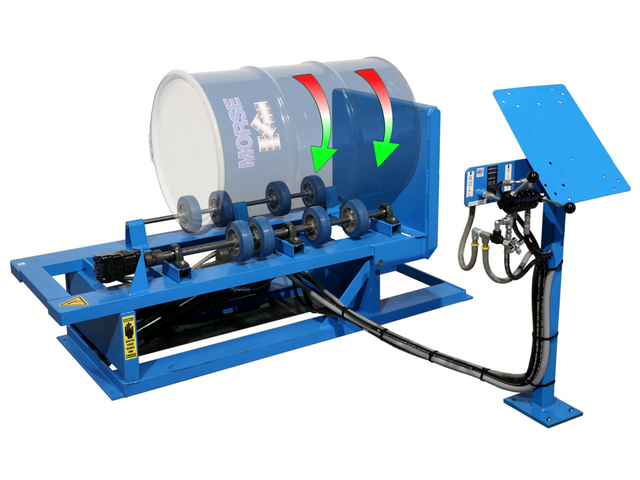
Drum Rollers
to gently mix drum contents